
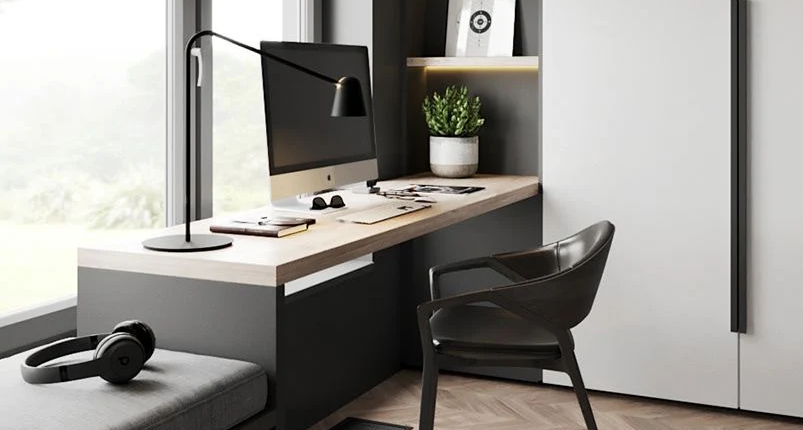
Study Design | Study Renovation
A study is a relaxing place where one can briefly escape from the mundane world and allow the mind to rest and rejuvenate. While the size of one's home is a common concern, with careful planning, it is still possible to fit a comfortable study into even a small space.
Study design is actually a relatively important aspect. Why is it important to make good use of the study renovation plan? For most people living with family, the bedroom is a space for solitude. However, from the perspective of professional interior design space planning, the most suitable exclusive space for solitude, reading, working, meditation, and developing personal interests should not have elements like a "bed" that are easily associated with sleep. Therefore, a study is more suitable than a bedroom.
Study renovation is a very complex matter. Many study renovation design renderings include detailed layout introductions, divided into collection areas, reading areas, and rest areas. If the study area is relatively small, the storage space can be arranged along the wall, the reading area can be placed next to the bed, and the remaining space will be the rest area. If the study area is large enough, home design can be flexibly arranged. For example, a customizable bookshelf or bespoke furniture can be placed in the center of the study, allowing for more rest areas to entertain guests.
Study design is absolutely not just about placing a desk and a bookshelf. There are many renovation design details that cannot be overlooked, such as the positioning of various computer peripherals and machines, the routing of network cables, sufficient lighting, and storage and display. These are all key aspects for our renovation company in creating a modern study. Furthermore, a study requires a quiet and elegant environment, so the decoration of this room should not be compared with other rooms. Both the location and the room's arrangement need careful consideration, so it is important to pay close attention.
| FAQ
What should be considered regarding color and lighting in study design?
In study design, colors can change the ambiance of the study. Colors can greatly influence people's moods, and since a study is a place for quiet contemplation, color matching becomes even more important. Bright, warm tones can relieve work pressure and free a suppressed soul. Light colors such as yellowish-green and bean paste have this function. In addition, it is crucial to pay attention to lighting. A well-lit study is conducive to reading and protecting eyesight. Therefore, when renovating a study, you can design a reading nook by the window, paired with a comfortable rattan chair and appropriate soft cushions, to add a touch of comfort and nature to the study.
How can bookshelves be placed in a study design?
Bookshelves are best placed against a wall, as this can provide a soundproofing effect in study design, maintaining the tranquility of the study and isolating external interference. A quiet and bright study is truly a sanctuary for the soul. Moreover, when renovating a study, bookshelves generally should not be placed in direct sunlight, as this is detrimental to the collection and preservation of books. Additionally, the choice of bookshelf should ideally be based on the space available; do not blindly pursue aesthetics or choose a highly designed but unsuitable bookshelf. The bookshelf should not be too tall, otherwise, accessing books will become inconvenient, potentially dampening reading enthusiasm. The size of the bookshelf should be sufficient to store the books you commonly read.
If I want soundproofing in my study, can I suggest this to the designer before renovation?
You can discuss your study design ideas with the designer, as the study should ideally be located away from the living room, entrance hall, and other areas. A study is a place for learning and work, and relatively speaking, it requires more quiet. Work efficiency is much lower in noisy environments than in quiet ones. Therefore, when renovating a study, sound-absorbing and soundproofing decorative materials should be used. The ceiling can use sound-absorbing plasterboard false ceilings, the walls can use PVC sound-absorbing panels or soft-packed decorative fabrics, and curtains can be chosen from thicker materials to block external noise.
How much space is needed for a study design? Should ventilation be considered when renovating a study?
Study design requires appropriate space and ventilation. For an average intellectual household, the study area should not be too large, ideally around a hundred square feet. It's best to choose a room where family members do not frequently move about for the study. At the same time, when renovating a study, ventilation must be considered. This is not only for health reasons but also because computers and other equipment require ventilation and heat dissipation after use; furthermore, air circulation helps regulate the humidity in the study, which is beneficial for preserving books. While considering ventilation, dust and insect prevention, such as screens, are also key points.
Can I designate a part of the living room as a study area?
Certainly, this is a common room design for small apartments. Creating a study area in a corner of the living room is also a good option for room renovation. Living rooms generally have more unused space, and utilizing it wisely can improve space efficiency. Additionally, since the living room is a common activity area for the whole family, setting up a study there can facilitate better communication among family members. A common approach is to place the study behind the sofa, with a desk and chair, and bookshelves against the wall for books, thus completing an open-plan study area. Alternatively, the side of the living room near the window can be converted into a study, where lighting will also be better, allowing for more effective use of natural light for reading.