Solid Wood Furniture Odor Analysis and Eco-Friendly Guide | Home Made Mall

Product Features: Natural Texture, Eco-Friendly and Healthy
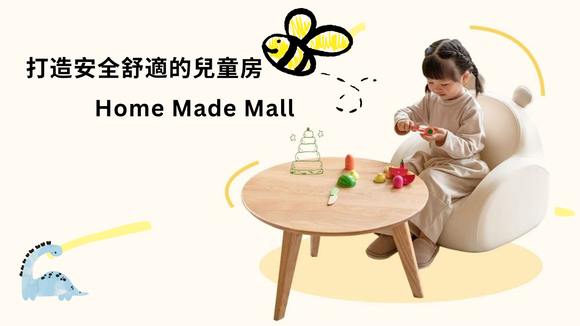
Solid wood furniture is favored by many for its natural texture and eco-friendly properties. Home Made Mall focuses on providing high-quality solid wood furniture, understanding the natural odor of wood and its impact on health, and offers products that use formaldehyde-free glue and eco-friendly finishes. Choose Home Made Mall to make your living environment safer and more comfortable, ensuring the health of you and your family.

The odor of solid wood furniture comes from volatile oils, resins, and natural substances inherent in the wood itself, with different wood species having different odors. Commonly used glues and finishing materials also affect the odor; eco-friendly glues and wood wax oil are the best choices. Although solid wood furniture has an odor, this does not mean it is unhealthy, and good ventilation can reduce odor concentration. Learn how to choose eco-friendly furniture to ensure indoor air quality meets national standards, making home life more reassuring.
Explore the sources of odor in solid wood furniture and its eco-friendly characteristics, understanding the natural odor of wood, and the impact of glues and finishes on odor. Master the techniques for selecting healthy and eco-friendly furniture to ensure a safe and comfortable living environment for you and your family. Home Made Mall provides you with professional advice.
Where does the smell of solid wood furniture come from?

Natural Wood Scent
Wood is rich in volatile oils, resins, gums, essential oils, and other natural substances, which give solid wood its unique scent. Different wood species often have distinct odors. White oak and ash have a soft and elegant scent, similar to vanilla; North American cherry wood and North American black walnut have extremely faint odors that most people can barely detect. In contrast, red oak has a more noticeable odor, and sensitive individuals might detect a slightly sour, wine-like, or unripe fruit-like astringent scent. Rubberwood also has a slightly sour smell, but it usually dissipates after drying. Pine wood is oilier than general wood, and its scent is relatively more pronounced, emitting a mild pine fragrance overall, with calming and anti-mite effects. Paulownia wood is often used as an auxiliary material and has no significant smell itself, but because drawers are sealed spaces with insufficient ventilation, the smell is more likely to emanate when they are opened. Scent, like aesthetics, varies from person to person. Whether it's perfume or solid wood furniture, the principle is the same. The same smell can evoke different feelings in different people, and these natural scents are normal and nothing to be overly concerned about.

Glue and Finish
In the manufacturing process of solid wood furniture, a small amount of adhesive is required. Even in traditional craftsmanship, professional carpenters use wood glue for panel jointing. Home Made Mall uses formaldehyde-free glues, primarily water-based polymer adhesives and two-component glues, which are very environmentally friendly and do not contain formaldehyde or benzene. However, glues may contain small amounts of volatile organic compounds (VOCs), which produce certain odors when volatilizing. To extend the lifespan of solid wood furniture and enhance its aesthetic appeal, solid wood furniture usually undergoes surface treatments such as spraying and painting. These finishes, as protective layers for the furniture, also produce odors. Commonly used finishing materials include oil-based paints, water-based paints, and wood wax oil. Oil-based paints have a more distinct odor, mainly from organic solvents; water-based paints use water as a solvent and are almost odorless when volatile; wood wax oil components come from natural beeswax and vegetable oil, producing a relatively mild natural odor when volatile. In terms of environmental friendliness, wood wax oil's components are more natural, making it more eco-friendly.

Does an odor necessarily mean it's unhealthy?
The odor of solid wood furniture does not necessarily mean it is unhealthy. People are often more concerned about safety and environmental friendliness, and whether it affects human health. Some people often associate odor with formaldehyde. In fact, having an odor does not mean formaldehyde levels exceed standards; it could be the smell from VOCs in glues and paints volatilizing after combining with air.

The VOCs volatilization period is usually 2 weeks to 6 months, and the smell will significantly weaken after adequate ventilation; formaldehyde is colorless and odorless under normal conditions, and only at high concentrations will it produce a strong irritating smell.

Does no smell mean it's healthy? This is also a misconception. Formaldehyde is colorless and odorless when released daily. You might not smell anything, but the formaldehyde concentration in the indoor air could already be exceeding standards. Recently, there has been concern about "chained apartments" that often use cheap particle board and inferior furniture for decoration. Although there's no obvious smell when entering these rooms, people who live in them for extended periods have experienced symptoms such as coughing and eye discomfort. After professional testing, the indoor formaldehyde concentration was found to be excessive. Even without an obvious smell, poor-quality decoration can still lead to excessive formaldehyde in the environment and harm health.

Home Made Mall Reminder:
Indoor formaldehyde concentration is affected by multiple factors, and measurements should be performed by professional agencies. Testing at home with test strips or instruments can easily be inaccurate. However, there's no need to worry excessively. Formaldehyde is ubiquitous in nature, including in the human body and wood itself, making it impossible to completely eliminate. As long as regular, eco-friendly building materials are used and the formaldehyde content in the air meets national standards, it is safe for human health.

Home Made Mall TIPS:
How to determine if a piece of solid wood furniture is environmentally friendly and healthy?
-
Look at the material: According to national standards, furniture can be called "solid wood furniture" if it contains more than 70% solid wood. However, many types of furniture made from engineered wood, veneered solid wood, or particle board as the main material can also be called "solid wood furniture." These types of furniture generally use more glue, while 100% pure solid wood furniture uses less glue and is more environmentally friendly. Therefore, when purchasing furniture, it is advisable to first confirm the material.
-
Look at the craftsmanship: In terms of glue usage for pure solid wood furniture, full panels < large panel edge-glued < finger-jointed boards. As full panels are difficult to avoid imperfections and are prone to cracking and warping, large panel edge-glued and finger-jointed boards are more common in the market. From an environmental perspective, it is recommended to choose furniture with large panel edge-glued craftsmanship because it uses less glue and has a higher aesthetic appeal. Large panel edge-glued construction involves joining solid wood boards of varying widths, which requires higher quality raw materials. The finished furniture offers significant advantages in terms of strength, stability, and aesthetics. Home Made Mall was also the first brand in the industry to introduce the concept of "large panel edge-glued," and this craftsmanship is widely applied in our products.